We are too many
concept and choreography: Dalija Aćin
dramaturgy: Igor Dobričić (NL/Ser)
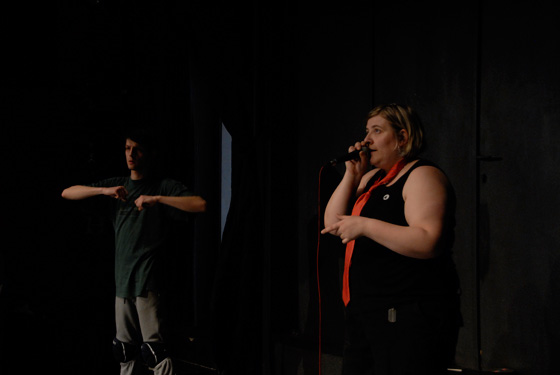
performed by: Zoe Gudović (queer activist), Bojan Djordjev (theatre director), Miloš Lolić (theatre director), Milan Marković (dragaturge), Maja Pelević (playwright)
produced by: Bitef Theatre, Belgrade
Fuck the privacy until it becomes public.
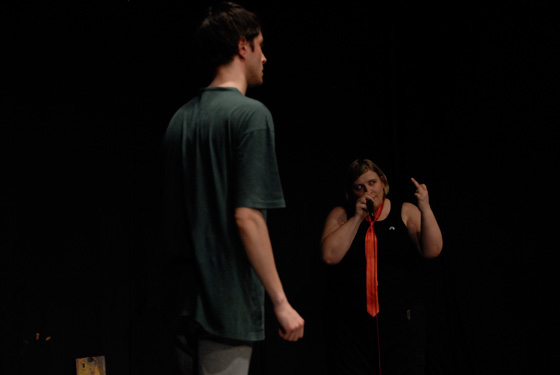
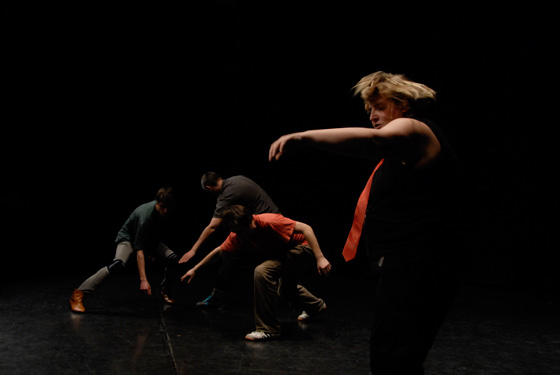
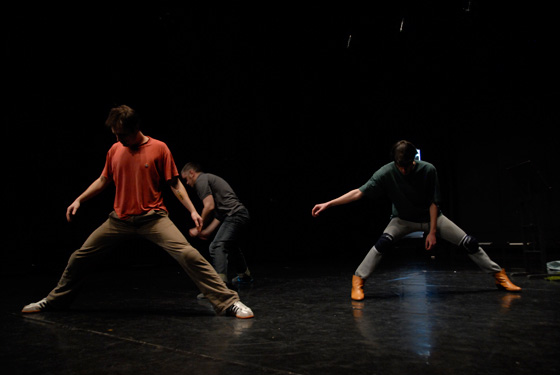
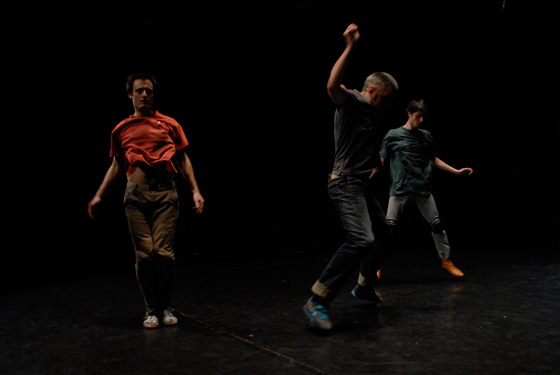
WE ARE TOO MANY is NOT a dance performance ABOUT hidden narcism, shameless exhibitionism, failing spectacle, unbearable loneliness and(im)possible community. It is rather an event in which all of these aspects of theatrical situation are performed "in real time".
|
|
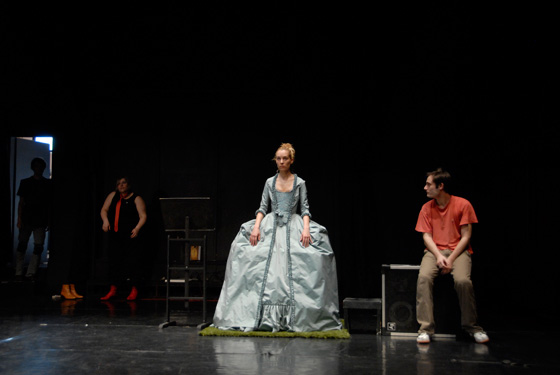
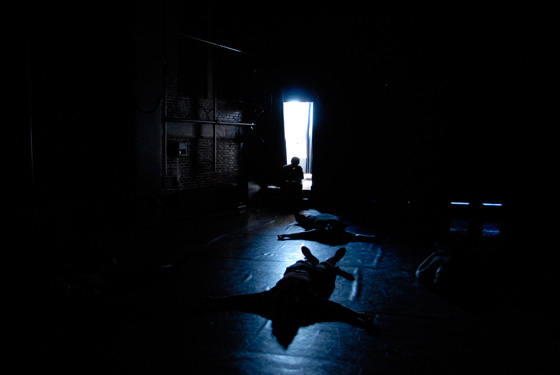
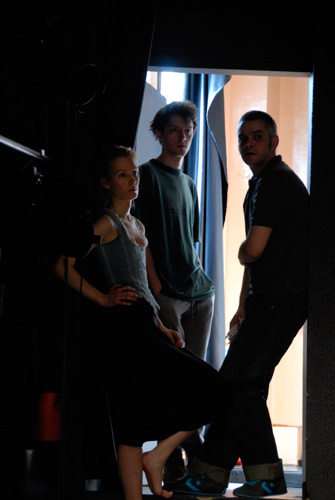
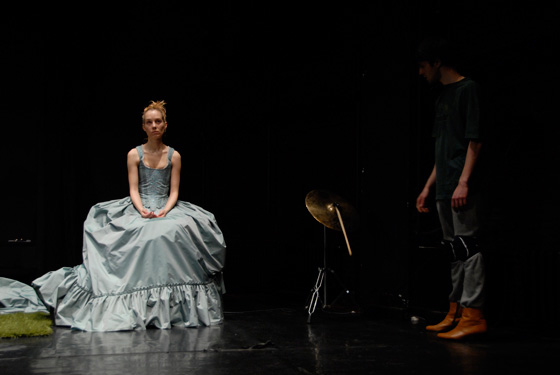
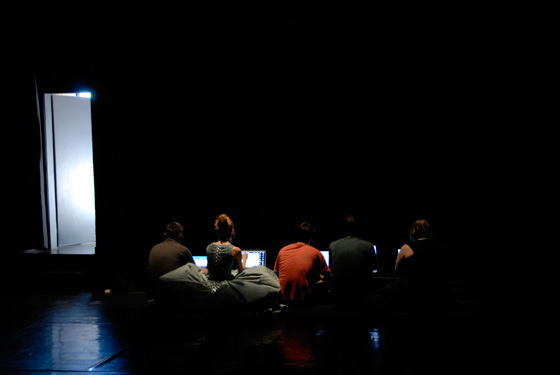
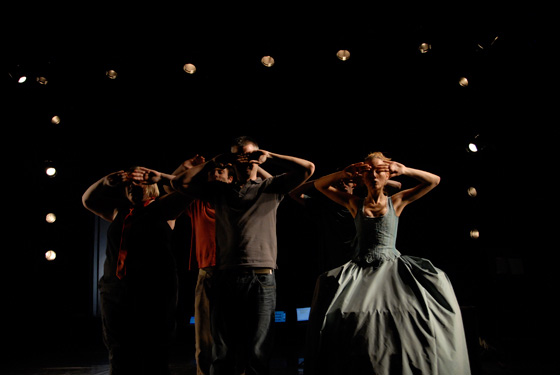
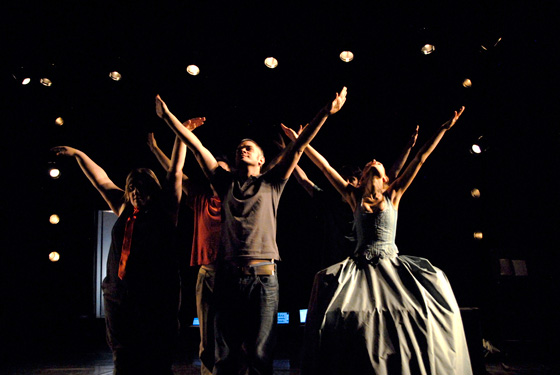
However, this does not imply that WE ARE TOO MANY is an incident without its own history. At a particular moment, some months ago, a particular group of people got invited to enter a particular process. By deciding to accept the invitation they appeared, dragging with them, into the space, their own skills, desires, affinities and projections. They talked with the choreographer and to each other, they proposed certain gestures, situations and ways of working, they refused some other. They started dressing up, they walked repeatedly across the bare stage, they uttered words addressing empty audience, fell out of time and away from each other and came back together. They danced. Performative frame was generated not by any singular intention, conceptual articulation or personal phantasy, but by an intense and unpredictable interaction and friction between MANY incongruent substances. TOO MANY.
|